Red attack vs green attack: telling bark beetle stages apart
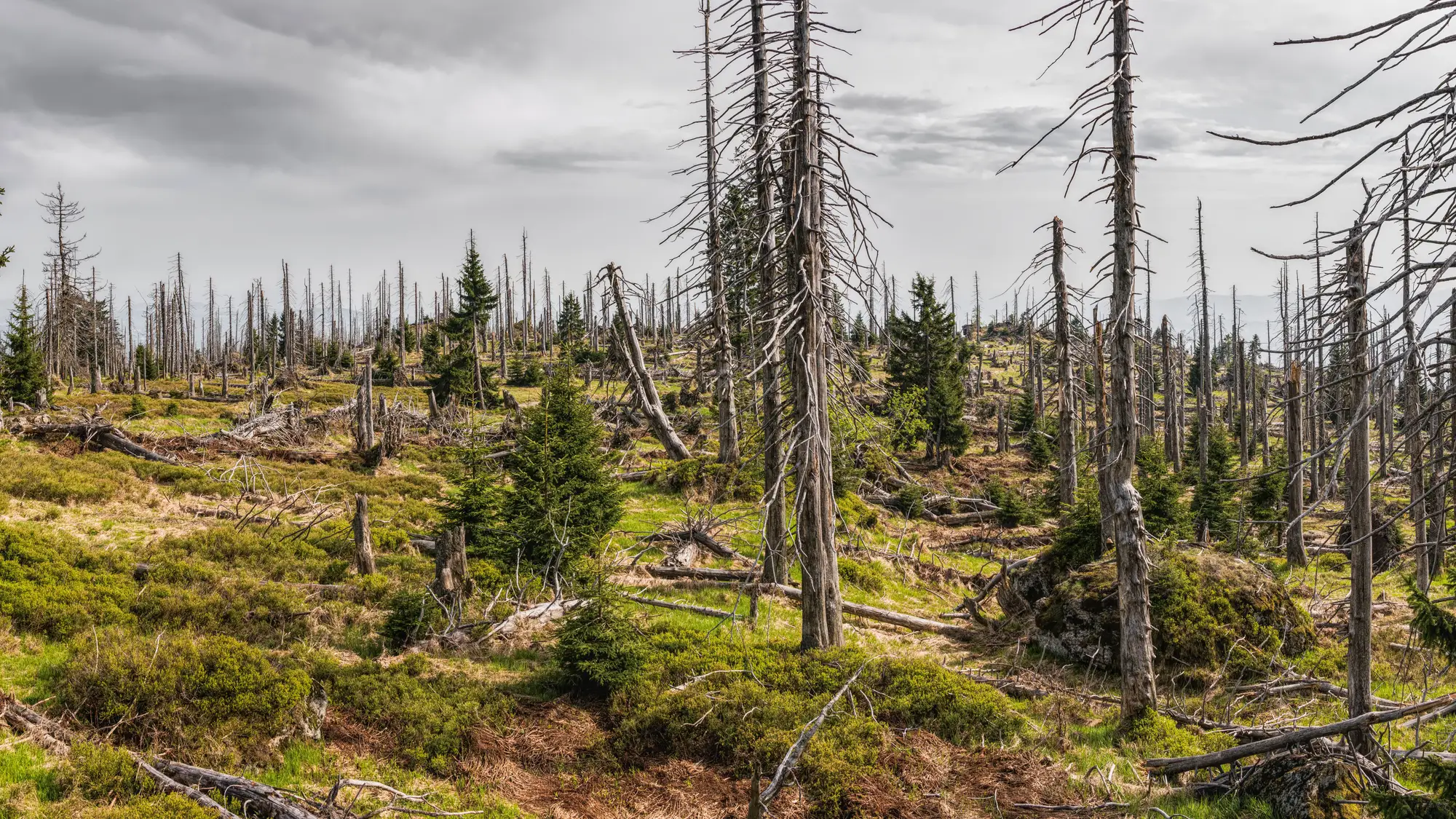
If you've sat in a debrief after an aerial survey flight and argued about whether a stand is still green attack or already tipping into red, you know the stakes aren't academic. Call it too early and you fly a salvage crew into timber that hasn't dried out yet. Call it too late and the sawlog value is already gone to blue stain and checking. Getting the stage right, and getting it right before the next flight window, is most of the job.
What green attack actually looks like
Green attack is the stage nobody can confirm from a plane. The tree is dead or dying, pitch tubes are forming, galleries are already under the bark, but the crown hasn't changed color yet. Needles stay green for weeks to a season after the attack, depending on species, elevation, and how cold the previous winter was. Ground crews find green attack by cutting into bark and looking for larvae or frass. From the air, or from a satellite pass, it's invisible to the naked eye. Multispectral imagery can sometimes pick up stress in the near-infrared bands before the human eye would catch anything, but even that is a probability call, not a confirmed stage.
This is the stage where waiting for the visual cue costs you the most time. By the time it's visibly red, the beetle brood has often already emerged and moved to the next stand over.
Red attack from the air: what actually changes
Red attack is the stage most people mean when they say "beetle kill." Needles fade from green through yellow-green to a rust-orange-red, usually one to two growing seasons after the initial attack, though timing varies by species (mountain pine beetle, spruce beetle, and southern pine beetle all run slightly different clocks). This is the stage that shows up clearly on a standard aerial survey flight, and it's also the stage that still has merchantable wood in most species. The sapwood hasn't fully degraded, blue stain fungus is present but hasn't gone deep, and mills will still take it.
Red attack is also the stage that's easiest to confuse at the edges. A stand under drought stress, a patch hit by a different defoliator, or trees stressed by root disease can all throw a reddish crown that isn't beetle at all. Confirming red attack from imagery alone, without a ground check or a second pass, is where a lot of false starts happen on a salvage prioritization list.
Grey attack: the stage that tells you the window closed
Grey attack is unmistakable even from a distance. Needles have dropped, the crown is bare or down to a few stubborn needles, and the standing dead snag reads grey or silver against the canopy. For salvage purposes, grey attack is mostly a loss signal. Depending on species and site conditions, sawlog value degrades fast once a stand hits grey, sometimes within a single season of the red phase ending. If your register is still showing a stand as red attack when it's already gone grey, you've lost the harvest window and probably didn't know it until the next flight confirmed it.
Why the gap between stages matters
None of this is new information to anyone running a forest health program. Aerial survey flights happen on a seasonal schedule, ground reports come in unevenly across districts, and the red-to-grey transition doesn't wait for either one. A stand can slide from merchantable red attack to degraded grey attack between survey windows, and nobody catches it until the wood is already too far gone for mills to want it.
That gap is the reason a monthly scored layer tracking the red-to-grey colour progression across a monitoring area is worth building into the rotation, rather than relying on the next scheduled flight to tell you what already happened. Bark Beetle Detection reads high-res multispectral imagery stand by stand and flags where a unit sits on that progression, so the salvage call gets made against something closer to real time than a flight calendar.
If you're trying to catch stands while they're still worth cutting, that monthly read is worth a look.