What grey attack actually means for salvage timber
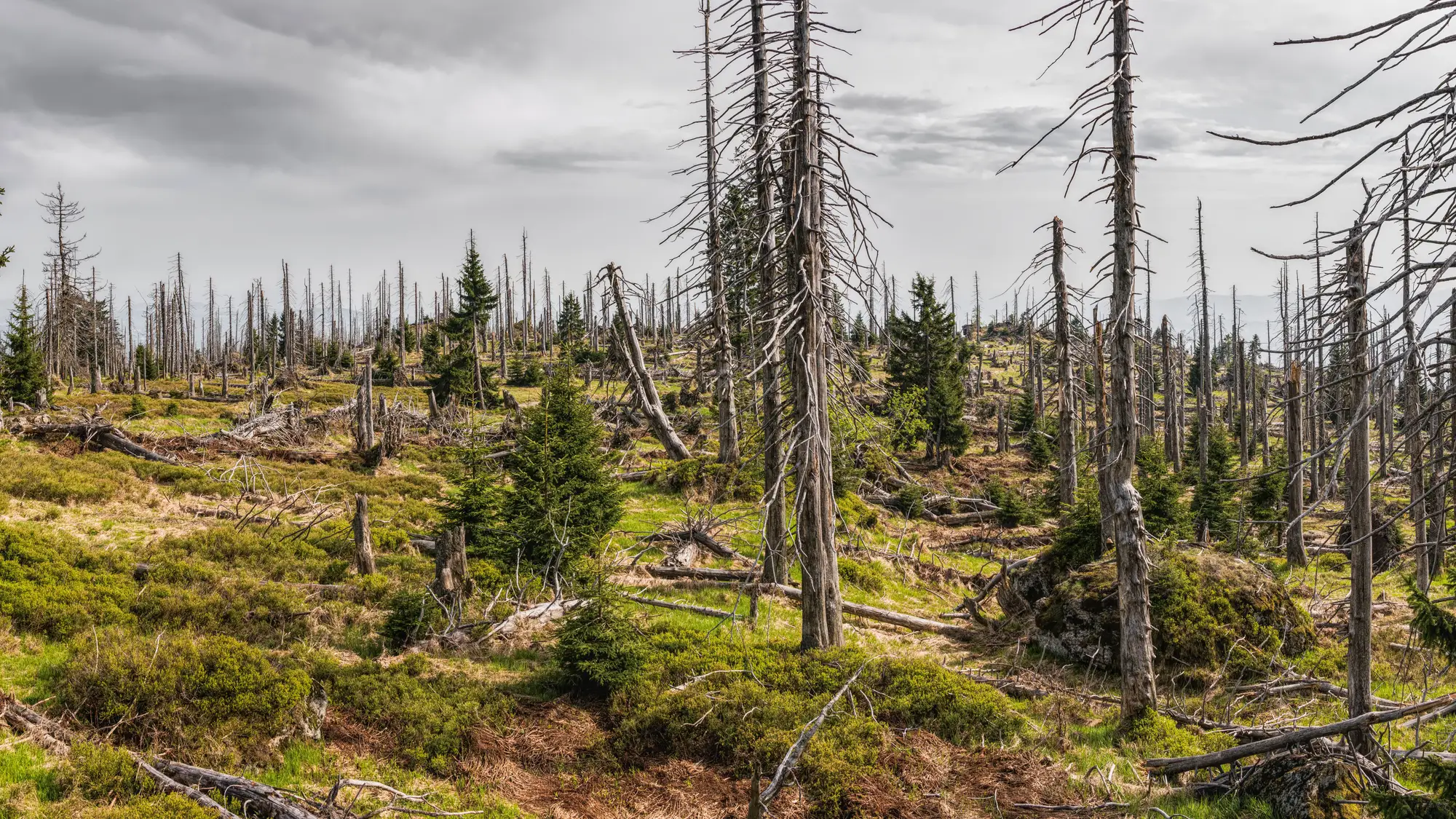
Grey attack is the stage after red attack where the crown has shed its needles, or the dead needles have dried and gone, leaving bare branches and a silver-grey trunk. It's the "standing dead" look most people picture when they hear bark beetle kill: a snag with no foliage left, bark starting to loosen or slough, and the wood underneath checking as it dries out.
If you've walked a stand through a full infestation cycle, you know the colour sequence by heart. Green attack is the trap. The tree still looks healthy from the ground or from a flight line, but the beetles and their blue stain fungus are already working under the bark. Red attack shows up next, usually eight to twelve months after the initial strike depending on elevation and species, when the crown fades from green to yellow to that unmistakable rust-red. Grey attack is what's left once the needles are gone, sometimes one to three years out from the original attack, and it's the stage where the tree stops hiding anything.
Why the grey stage matters for a salvage decision
Grey attack is a timing problem, not just a visual marker. The sapwood checks as moisture drops, blue stain keeps spreading through the dead tissue, and secondary insects like wood borers and ambrosia beetles move in once the tree is fully dead. Every season a grey-attack stand sits unharvested, the recoverable volume and the grade both slide. A stand cruised at year one of grey attack can still pencil out for sawlogs. The same stand at year three is often pulp or firewood at best, and in some cases not worth the haul cost at all.
That's the part ground crews and aerial survey both struggle to catch on time. A flight window gets you a snapshot once or twice a season if you're lucky with weather and budget. Ground reports from field staff or timber cruisers are accurate where they go, but nobody's walking every stand in a management unit every month. So stands that cross from red to grey between visits get discovered late, after the degrade clock has already been running for a while.
Telling grey attack apart from other standing dead
Needle drop alone isn't a diagnosis. Drought-stressed stands, root disease centers, and old fire-scarred trees can all shed needles and look grey from a distance. What separates beetle-killed grey attack is the pattern: it follows the red attack that came before it, it tends to cluster around the original infestation epicenter, and the bark itself usually tells the story if you get close. Loose or sloughing bark with gallery marks and boring dust underneath points to beetle kill. A uniform grey crown with intact, tight bark and no gallery evidence is more likely something else, drought or a different pathogen entirely.
This is where a stage-by-stand record earns its keep instead of a one-time aerial detection flight. Bark Beetle Detection reads a forest health monitoring area on a monthly cadence and scores where each stand sits on that same red-to-grey progression, so a unit that was red attack last month and is sliding into grey this month shows up on the register before the next scheduled flight would have caught it. It's a spectral read on infestation stage across your whole monitoring area, not a single flight's worth of visual interpretation.
For a specialist deciding where the salvage crew goes next week, the practical question is rarely "is this beetle kill." It's "how long has this patch been grey, and is there still merchantable wood standing on it." Catching that transition early, while the stand is freshly grey rather than two seasons into it, is the difference between a salvage sale that covers its costs and one that doesn't.
If grey-attack timing is costing you volume on paper every season, it's worth seeing how a monthly scored layer tracks that progression stand by stand.